
Order before 4pm EST for Same-Day Shipping!

Direct Thermal Labels & Thermal Transfer Labels
Selecting the right label solution is crucial for efficient operations, accurate tracking, and professional presentation. We offer two primary types of thermal labels: direct thermal and thermal transfer, in a wide range of colors and sizes. Direct thermal labels use heat-sensitive material that eliminates the need for ink, toner, or ribbons, reducing consumable costs and maintenance. Thermal Transfer Labels, on the other hand, prioritize durability and print quality. These labels utilize a heated printhead to transfer solid ink from a ribbon onto the label material, creating a robust and long-lasting image. We offer a range of options such as pre-cut labels, continuous roll labels, and 2-up rolls to meet your needs.
Thermal Label Rolls Features and Benefits:
- Thermal labels print significantly faster than traditional printing, speeding up your packing and shipping times.
- All of our direct thermal labels and thermal transfer labels come on rolls, making them easy to dispense and store.
- We offer a variety of colors for organization and color coding.
- Don't see your size or color available? We can create custom labels in any size, color, or printing style.
Color
Quantity
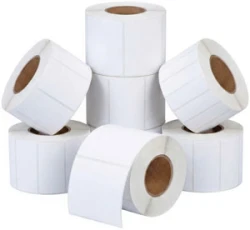
Top-coated direct thermal labels feature a protective layer that makes them more resistant to moisture, oils, and abrasion, keeping barcodes legible for extended periods. The smooth top coating reduces friction on the printer's heat head, extending your hardware's lifespan and reducing maintenance costs. These labels are the best and most reliable choice for high-volume shipping and logistics applications because they combine the ease of direct thermal printing without ribbons with greater durability.
| Stock # | Description | Labels Per Roll | Qty/Case | Price | ||
|---|---|---|---|---|---|---|
THL342 New | 4 x 2" White Thermal Label | 3,000 | 4 / Case | As low as $39.80/ Case | ||
THL343 New | 4 x 3" White Thermal Label | 2,000 | 4 / Case | As low as $38.75/ Case | ||
THL344 New | 4 x 4" White Thermal Label | 1,500 | 4 / Case | As low as $38.50/ Case | ||
THL146 New | 4 x 6" White Thermal Label | 250 | 16 / Case | As low as $39.95/ Case | ||
THL346 New | 4 x 6" White Thermal Label | 1,000 | 4 / Case | As low as $51.95/ Case | ||
THL348 New | 4 x 8" White Thermal Label | 750 | 4 / Case | As low as $38.40/ Case |
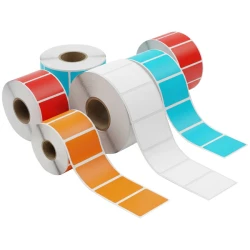
Thermal transfer labels utilize a heated ribbon to transfer ink onto the label material, creating a highly durable and long-lasting print. Key features include excellent resistance to fading, scratching, smudging, and chemicals, making them ideal for harsh environments, outdoor use, and applications requiring extended readability. Benefits include superior print quality with crisp text and scannable barcodes, versatility across various materials (paper, synthetic, polyester), and the ability to print in color.
| Stock # | Description | Color | Labels Per Roll | Qty/Case | Price | |
|---|---|---|---|---|---|---|
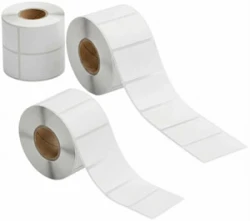
Removable direct thermal labels are a practical labeling solution known for their ability to be peeled off cleanly without leaving behind adhesive residue or damaging the surface. Removable thermal direct labels are cost-effective due to reduced consumables, increased efficiency from faster printing and lower maintenance, and a cleaner process, as there is no sticky residue to clean up.
| Stock # | Description | Color | Labels Per Roll | Qty/Case | Price | |
|---|---|---|---|---|---|---|
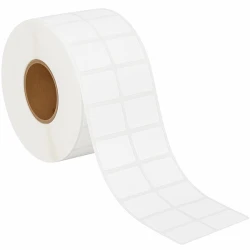
2-up thermal direct labels are a type of label material specifically designed for direct thermal printers, which means they don't require ink, toner, or ribbons. The "2-up" configuration refers to a setup where two labels are positioned side by side on the roll, thereby maximizing printing efficiency and speed.
| Stock # | Description | Color | Labels Per Roll | Qty/Case | Price | |
|---|---|---|---|---|---|---|
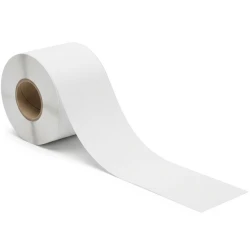
Continuous thermal direct labels are a versatile and cost-effective labeling solution, particularly for applications that require variable lengths and short-to-medium-term readability. Unlike traditional labels, they come in a continuous roll, allowing users to print labels of any desired length without waste.
| Stock # | Description | Color | Labels Per Roll | Qty/Case | Price | |
|---|---|---|---|---|---|---|
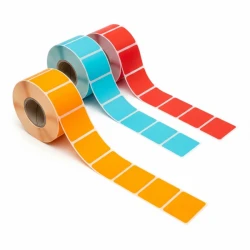
Direct thermal labels are ideal for applications with a shorter lifespan, like shipping labels, receipts, and temporary identification, due to their sensitivity to prolonged exposure to heat, light, and abrasion. Thermal direct labels do not require ink, toner, or ribbons, which simplifies the printing process and reduces ongoing supply costs and maintenance.
| Stock # | Description | Color | Labels Per Roll | Qty/Case | Price | |
|---|---|---|---|---|---|---|
What are thermal labels?
Thermal labels are printed with heat instead of ink or toner. They're built for high-speed, high-volume work where uptime and consistency matter most.
Inventory and tracking
Retail pricing
Product identification
Direct thermal
- No ribbon required
- Best for short-term labels
- Ideal for shipping labels, receipts and short-cycle labeling
- Cost-effective for high throughput
- Sensitive to heat, light and friction over time
Thermal transfer
- A ribbon transfers the image for a durable, long-lasting print
- Resists moisture, abrasion and chemicals
- Great for manufacturing, warehousing and product ID
- Built for demanding environments
Label comparison chart
| Label type | Print method | Durability | Best for | Environment |
|---|---|---|---|---|
| Standard direct thermal | Direct thermal | Low | Shipping, receipts, food labeling | Indoor, controlled |
| Premium direct thermal | Direct thermal | Moderate | Retail shelf labels, healthcare | Indoor, moderate exposure |
| Paper thermal transfer | Thermal transfer | High | Inventory, warehousing, carton labels | Indoor, general |
| Synthetic (poly) thermal transfer | Thermal transfer | Very high | Chemical drums, outdoor assets, manufacturing | Harsh, outdoor, chemical exposure |
How to choose the right thermal label
Five questions settle almost every thermal label order.
Label lifespan
How long does the label need to last?
Environmental exposure
Will it face heat, moisture, sunlight or chemicals?
Surface material
What surface is the label going on?
Printer compatibility
Does it match your current thermal printer setup?
Print speed and volume
How fast, and how many labels a day?
Still deciding? Talk to a label specialist.
Tell us your printer, surface and environment and we'll match the label and ribbon.
Frequently asked questions
Direct thermal labels have a heat-sensitive coating and need no ribbon. Thermal transfer labels are printed by melting ink from a ribbon onto the label, which gives longer-lasting, more durable prints.
Neither is better in every case. Direct thermal is cheaper and simpler for short-term uses such as shipping labels and receipts. Thermal transfer is better for barcodes and labels that must last months or years or face heat, light, moisture, or abrasion.
Check for a ribbon. If the printer has a ribbon path and ribbon spindles, it is thermal transfer (and usually can print direct thermal too). If it has no ribbon, it is direct thermal only. You can also scratch a label with a fingernail: a dark mark means it is direct thermal stock.
Generally yes, if you print without a ribbon. Thermal transfer labels, however, will not print properly in a direct thermal only printer, since it has no ribbon.
Top coated direct thermal labels have a protective layer over the heat-sensitive coating that improves resistance to moisture, oil, and scuffing compared with standard direct thermal labels.